Compare five abrasive-kit sourcing models
Decide when OEM production sourcing, a distributor, a trading company, a contract packer, or in-house assembly fits the buying brief.
Open guide →Plan proposed accessory bundles, packaging responsibilities, branding and buyer-supplied barcode data; source capability and approval evidence are confirmed per project.
Logistics, branding capabilities, and compliance standards for custom-packaged kits.
Move beyond a fixed catalog by combining product families in one quoted kit. Cotton wheels, compound bars, hex arbors, detail sticks or assorted sandpapers can be scoped around a workflow such as metal restoration or woodworking preparation.
Packaging formats can be discussed as a structural brief. The quotation must identify format availability, dieline owner, materials, sample method, approval evidence and setup cost:
The order plan can include a review of buyer-supplied barcode, warning and origin requirements plus an approved label layout. The responsible checker, method and retained record must be named; final marketplace and import compliance remains subject to current destination rules.
For online sellers, the project specification can include carton dimensions, pack weight, agreed handling tests and shipping-label space. Marketplace fee tiers and warehouse acceptance must be checked against the channel's current rules.
Test the quoted cotton-wheel construction, stitch criteria and sandpaper grits in your own facility.
Define the accessory selection, grits, component sources and custom inserts with the project contact.
The quotation states whether the buyer, packaging source or another named party supplies the dieline, which format is used and who approves it.
Physical packaging mockups and barcode placement checks can be scoped for visual validation before order approval.
The quotation names each SKU's production source, written schedule and agreed inspection points after specification and artwork approval.
Loading, freight, delivery point and customs responsibilities are confirmed with the selected Incoterms rule and logistics plan.
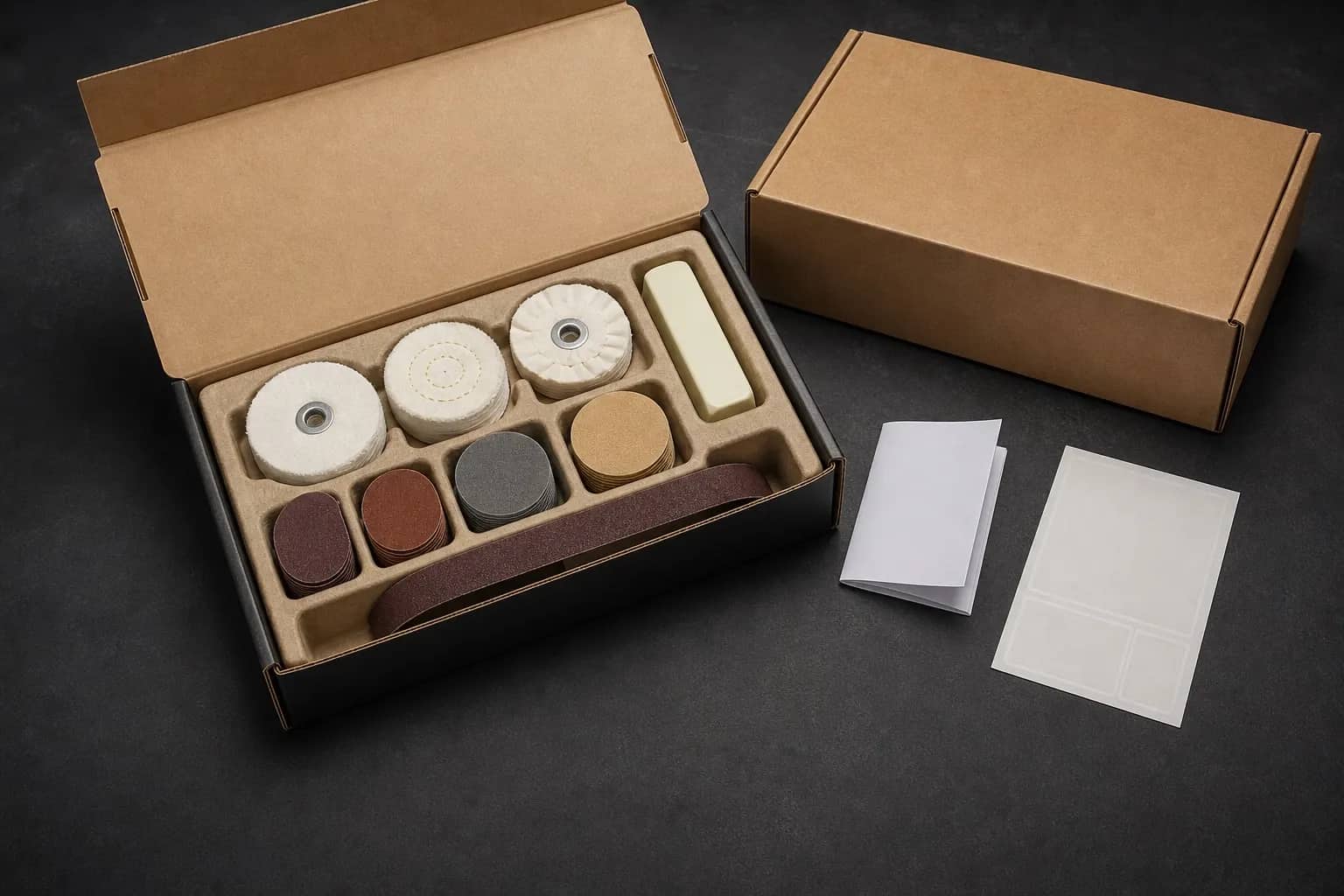 AI-generated concept — not a customer order, dieline, label or shipment
For tool brand distributors, product differentiation comes from custom combinations, clear substrate compatibility guides, and clean retail branding — not just the abrasive raw material itself.
Bulk and retail-bundle scopes are quoted only after the component and packaging sources are identified.
Send the pack format and dimensions. The written response will state whether a CAD dieline exists, who owns it, any setup charge and what approval sample is available.
Send OEM RequirementsPrivate label packaging rules, barcode compatibility, lead times, and shipping processes for B2B distributors.
MOQ depends on product mix, print process, packaging structure, tooling, material source and order quantity. It is stated in the dated written quotation after the SKU and pack specification are reviewed.
The quotation can state whether a PDF, DXF or other dieline exists, who owns and supplies it, which digital or physical mockup is feasible, and the charges and revision limits. No dieline or mockup is promised by this page.
A quotation can scope use of buyer-supplied UPC or FNSKU data and name the party, scanner, sample stage and retained scan record. Barcode size, quiet zones, contrast, substrate and placement remain subject to the buyer's current GS1 and marketplace requirements. No production scan record is currently published.
Warning sheets, process guides or grit-to-substrate charts can be evaluated for quotation. Languages, approved copy, translation responsibility, usage rights, paper, dimensions, fold and print source must be confirmed in the packaging specification.
Direct warehouse delivery may be quoted through a logistics provider after the destination, importer-of-record requirements, product classification and service availability are reviewed. The selected Incoterms rule, named place, taxes, customs responsibilities and exclusions must be stated in writing.
These short guides separate product fit, customization and verification questions so procurement teams can issue a more comparable RFQ.
Decide when OEM production sourcing, a distributor, a trading company, a contract packer, or in-house assembly fits the buying brief.
Open guide →Compare branding, assortment control, MOQ, validation work and replenishment tradeoffs before requesting quotes.
Open guide →Map wheel-restoration and metal-polishing workflows to a private-label kit, sample plan and packaging specification.
Open guide →Tool brands, distributors and online sellers can submit a scoped RFQ for component sourcing, samples and packaging approval; availability and terms are confirmed in writing.