China Abrasive Sourcing & OEM Project Support
SCOTTCHEN is the brand used for Shanghai-based abrasive sourcing and OEM project support covering buffing wheels, sanding discs, flap discs, cutting wheels, sanding belts and private-label kits. Production source, legal entity, documents and export scope are confirmed per quotation.
Is SCOTTCHEN a manufacturer or a sourcing partner?
SCOTTCHEN is the brand and B2B project channel used for Shanghai-based abrasive sourcing and OEM coordination. The website does not claim that every listed product is made by one SCOTTCHEN-owned factory. Each quotation should identify the legal contracting entity, responsible production source, production location and exact SKU scope before a buyer approves samples or places an order.
- Published role
- B2B sourcing, sample planning, OEM coordination and written quotation support.
- Confirm per quotation
- Contracting entity, production source, location, specification, evidence and commercial terms.
How buyers should verify the quoted production scope
SCOTTCHEN coordinates abrasive sourcing and OEM projects from Shanghai. A quotation should identify the contracting entity, responsible production source, component scope, named Incoterms place and the documents available for buyer verification.
Different product families can involve different converting, assembly, bonding, compound and packaging processes. Buyers should request a process map for the quoted SKU and confirm which operations are performed by which source rather than assume that every component is made at one facility.
The RFQ should also name the target market, applicable product rules, quality records, approved packaging inputs and export documents. Any engineering, audit or regulatory support is confirmed for the specific project in writing.
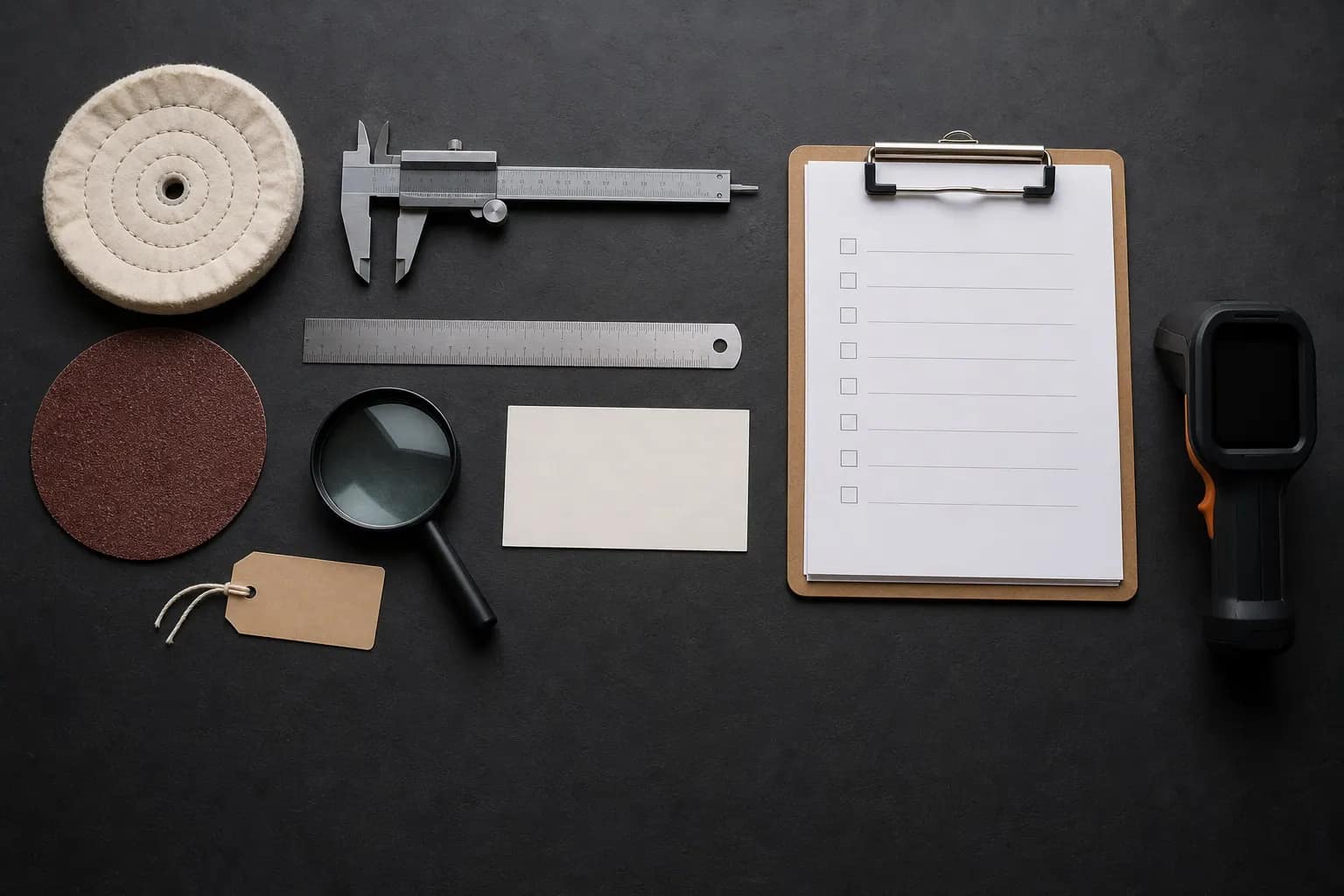
Illustrative quality-evidence planning concept — not a facility photograph
This image illustrates a review workflow only. Actual entity documents, facility evidence, certificates, test reports and inspection records must be supplied and verified for the quoted source and SKU.
Quoted Abrasive Product Scope
The sourcing scope covers six abrasive categories. The responsible source, applicable quality system and supporting documents are confirmed per quoted product.
Buffing & Polishing Wheels
Cotton buffs, sisal wheels, airway buffs, compound bars
View Product Details →Sanding Discs
Hook & loop, PSA, fiber, mesh, quick-change discs
View Product Details →Flap Discs
Type 27/29, zirconia, ceramic, aluminum oxide
View Product Details →Sanding Belts
Portable, bench, file, wide, knife making belts
View Product Details →Cutting Wheels
Metal, INOX stainless, thin cut-off, masonry
View Product Details →Abrasive Kits
Polishing and sanding kit concepts quoted by BOM, source and packaging scope
View Product Details →SKU-Level Quality Evidence Plan
Inspection and testing are agreed for the exact source, market and SKU; no universal factory process is implied.
Source & Specification Review
Record the contracting entity, production source and location, approved specification revision, materials or components, labeling scope and any substitutions that require buyer approval.
Sample & Test Plan
Identify the representative sample, applicable market requirement, test method, acceptance criteria, responsible laboratory or inspector and evidence to be retained for the quoted SKU.
Shipment Evidence
Agree the inspection scope, sampling level, packaging and barcode checks, report format, release authority and handling of nonconforming goods before production or shipment.
OEM / Private Label Services
SCOTTCHEN supports OEM and private-label sourcing for distributors, tool brands, hardware channels and industrial buyers. Product availability, responsible source, customization scope and packaging options are confirmed per quotation.
The OEM workflow follows a structured five-step process:
- 1Specification & Quotation: Submit product requirements, target application, volume projections and packaging direction. The written response states available technical input, candidate sources, assumptions and quotation scope.
- 2Representative Samples: The proposed source, sample identity, specification and test responsibility are recorded before buyer evaluation.
- 3Written Approval & Terms: Sample approval, MOQ, fees, payment milestones, lead-time assumptions and change controls are documented before order placement.
- 4Production & Evidence: The quoted source follows the agreed quality plan and provides the inspection or test records specified in the order documents.
- 5Packing & Shipment: Goods are packed to buyer-approved requirements; Incoterms, named place and logistics responsibilities are confirmed in writing.
Export Documents & Buyer Profiles
Export documentation depends on the contracting entity, origin, destination, product and Incoterms rule. The quotation and shipping plan should identify invoices, packing lists, bills of lading, origin documents and any product-specific market-access evidence required for the shipment.
Common sourcing briefs may come from:
- Hardware distributors and industrial MRO supply chains
- Private label tool brands selling through retail, distribution, and e-commerce
- Amazon FBA and e-commerce sellers needing a documented packaging and barcode approval plan
- Industrial end-users and polishing operations buying direct in volume
- Trading companies and sourcing agents consolidating mixed abrasive containers
Supplier Documents & Product Evidence
Entity Documents
Confirm the contracting entity, business registration and beneficiary details before payment.
Product Standards
Name the applicable market and product standard in the RFQ for each safety-critical SKU.
Third-Party Reports
Verify report number, issuing body, product coverage and validity against the exact quotation.
Grit System
Identify whether FEPA, ANSI/CAMI or another grading system applies and confirm the reference for the quoted SKU.
Supply Chain Planning
Shanghai serves as a coordination point for quotations and export planning. The written offer should name the actual production source, country of origin, proposed port or handover point, freight assumptions and lead-time milestones; none of these should be inferred from the coordination address.
A sourcing plan should identify the proposed grain, backing, converting, assembly and packaging sources plus substitution controls. Any claim about imported materials, supplier relationships, nearby packaging capacity or shortened lead time requires project-specific documentation.
Why Source Abrasives from China?
China has a broad coated- and bonded-abrasive supply base. International buyers should compare landed cost and measured performance from representative samples rather than assume a universal percentage saving or equivalent quality across suppliers.
China can offer multiple sourcing models across abrasive conversion, assembly, bonded products and packaging, but capability, MOQ and evidence vary by source. Buyers should request like-for-like quotations tied to the same specification and approved sample.
Select the sourcing model using measured sample performance, entity and facility evidence, change control, total landed cost, lead-time milestones and recourse for nonconforming goods. Capacity and delivery claims should be confirmed for the quoted source and order window.
How to Start Sourcing From SCOTTCHEN
1. Send Inquiry
Submit an RFQ via our contact form with product interests, specs, quantities, and target market.
2. Review Quotation
Review pricing basis, MOQ assumptions, lead-time milestones, documents and commercial terms in the written quotation.
3. Approve Samples
Evaluate an identified representative sample against the agreed specification, test plan and acceptance criteria.
4. Confirm Order Controls
Confirm the contracting and production entities, quality plan, packaging, payment milestones and named Incoterms place before the purchase order.
Frequently Asked Questions
Q1:Why should I source abrasive tools from a China abrasive manufacturer?
China has a broad coated- and bonded-abrasive supply base covering grains, backings, converting, bonding and pack-out. Buyers should compare total landed cost, component source, quality plan, sample evidence, MOQ, lead time and logistics assumptions instead of relying on a generic percentage-saving or factory-direct claim.
Q2:What is SCOTTCHEN's role in an abrasive sourcing project?
SCOTTCHEN provides Shanghai-based B2B sourcing and OEM project support. Each written quotation should identify the contracting entity, responsible production source and location, quoted component scope, commercial terms and the evidence available for the exact SKU.
Q3:How is quality control defined for a quoted SKU?
The buyer and quoted production source should agree a written quality plan covering specification revision, sample identity, inspection points, sampling level, test method, acceptance criteria, records and nonconforming-product handling. No fixed AQL, test list or release process is implied across all products or sources.
Q4:Can you provide third-party factory audit reports or certifications?
Request entity documents, the responsible production source, the applicable certificate or test report for each SKU, inspection records and any buyer-arranged audit scope. Certificate numbers, issuing bodies, product coverage and validity must be checked against the exact quotation before they are used for market access or product claims.
Q5:What are the payment terms for new international customers?
Payment method, deposit or balance milestones, currency, beneficiary, banking charges and document conditions vary by contracting entity and project. Buyers should rely only on the written quotation, pro-forma invoice and contract after verifying that the beneficiary matches the approved contracting arrangement.
Q6:How do I start sourcing abrasive tools from SCOTTCHEN?
Submit the product, quantity, specification, packaging, target market and requested Incoterms rule. The written quotation should then identify the proposed source, sample plan, evidence scope, MOQ, fees, lead-time milestones, payment terms and named Incoterms place before any order is approved.
Ready to Evaluate Our Surface Finishing Accessories?
Tool brands, distributors and online sellers can submit a scoped RFQ for component sourcing, samples and packaging approval; availability and terms are confirmed in writing.