Abrasive Product Quality Control Planning
Define SKU-level checks for dimensions, construction, operating limits, grit, packaging and pre-shipment evidence.
Quality Plan Snapshot
Example fields for a buyer-approved specification, sampling plan and release record.
- Dimensional Inspection: Center bore, outer diameter, thickness, and fit criteria are checked against the approved drawing and reference sample.
- Applicable Performance Checks: Runout, balance, fit, or speed-related tests are defined per SKU and recorded in the agreed quality plan.
- Grit & Surface Review: Material segregation and surface checks can be defined in the quality plan, followed by testing against the approved sample and intended substrate.
- Labeling & Audit Scope: A quotation may define a responsible sample-scan method for buyer data; third-party inspection access, timing, evidence and fees must also be agreed.
Checks That Can Be Specified
1. Raw Material Verification
2. Cotton Wheel Ply & Density Audits
3. Stitching Tensile Strength Testing
4. Arbor Hole Bore Sizing Tolerance
5. Grit Calibration & Uniformity
6. Disc Dynamic Balance Verification
7. Adhesion & Resin Backing Checks
8. Barcode Scan-Control Planning
Specification, Test Method, and Release Record
Different abrasive accessories require different acceptance methods. Before production, the buyer and supplier should confirm the applicable dimensions, operating limits, sampling level, test method, and evidence required for each SKU.
Record dimensions, materials, construction, tool compatibility, labeled operating limits, packaging, and any agreed tolerance. Keep an identified approval sample where practical.
Depending on the product, checks may include dimensions, fit, visible construction, runout, balance, backing adhesion, grit assortment, barcode readability, and pack-out verification.
Link inspection results to the lot, purchase order, approved artwork, and sampling record. Define how nonconforming product is contained, reviewed, and corrected before release.
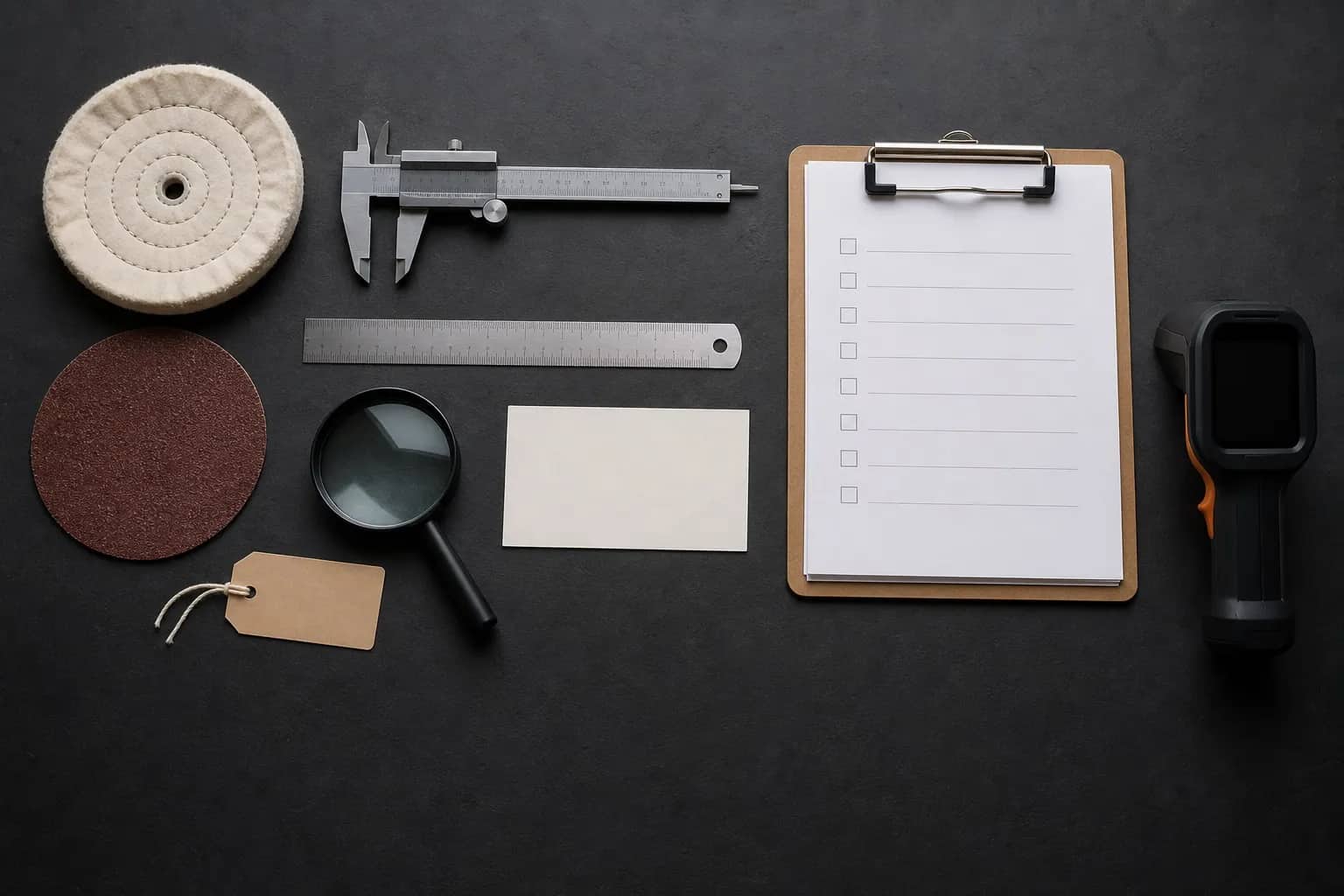 AI-generated planning concept — not a factory, laboratory or test result
Typical QC Fields
- Dimensions & Fit:Approved drawing
- Construction:Reference sample
- Operating Limit:SKU label/spec
- Barcode & Pack:Approved artwork
- Sampling & Evidence:Agreed QC plan
Pre-Shipment Inspections
A buyer may request third-party or internal pre-shipment inspection. Inspection company, location, sampling level, evidence, timing, access and fees must be confirmed in the quotation and quality plan.
Do not accept unlisted tests or reports as included in the order.
Verify our materials yourself
Request a physical sample kit to run stitch, density, and grit checks in your local testing facility.
Configure Test SampleFrequently Asked Questions
Technical tolerance boundaries, material test reports, and quality checking methodologies.
Q:How is the inner bore tolerance confirmed for polishing wheels?
The bore dimension and tolerance are confirmed per SKU in the approved drawing or specification. The inspection method, gauge, and sampling level should be agreed before production.
Q:How do you verify the density and ply count of cotton polishing wheels?
The approved specification records ply count, construction, and relevant weight or thickness criteria. Production samples can then be checked against those agreed values and the retained reference sample.
Q:Do you run speed tests on grinding and fiber discs to prevent safety failures?
Speed-related checks depend on the product design, labeled operating limit, and applicable standard. The required test method, sampling frequency, and report should be confirmed in the quality plan before ordering.
Q:How do you prevent grit contamination in sandpapers and polishing compounds?
The quality plan can define material segregation, line-clearance, supplier-lot control, and surface inspection requirements. Fine finishing products should be evaluated against an approved sample on the intended substrate.
Q:Can we hire third-party inspection firms to audit the shipment before loading?
Third-party pre-shipment inspection can be discussed during quotation. The buyer should confirm the inspection company, scope, timing, access requirements, and responsibility for inspection fees in writing.
Ready to Evaluate Our Surface Finishing Accessories?
Tool brands, distributors and online sellers can submit a scoped RFQ for component sourcing, samples and packaging approval; availability and terms are confirmed in writing.